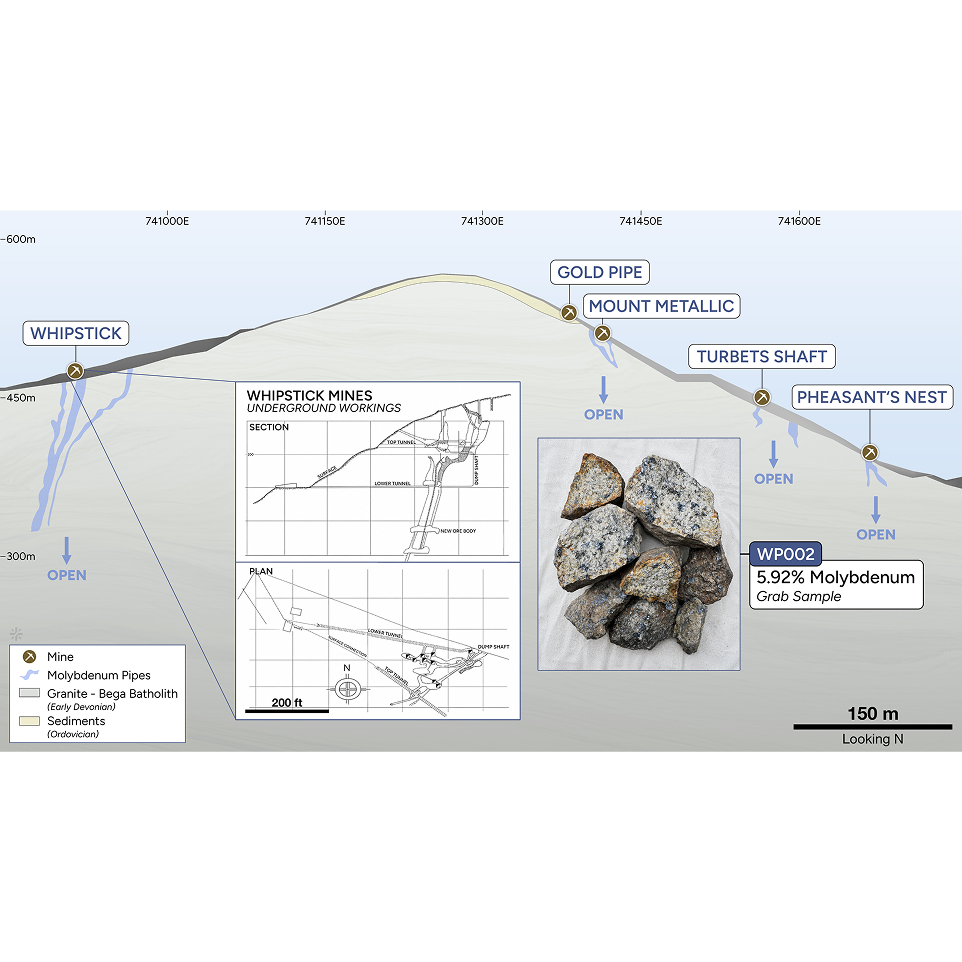
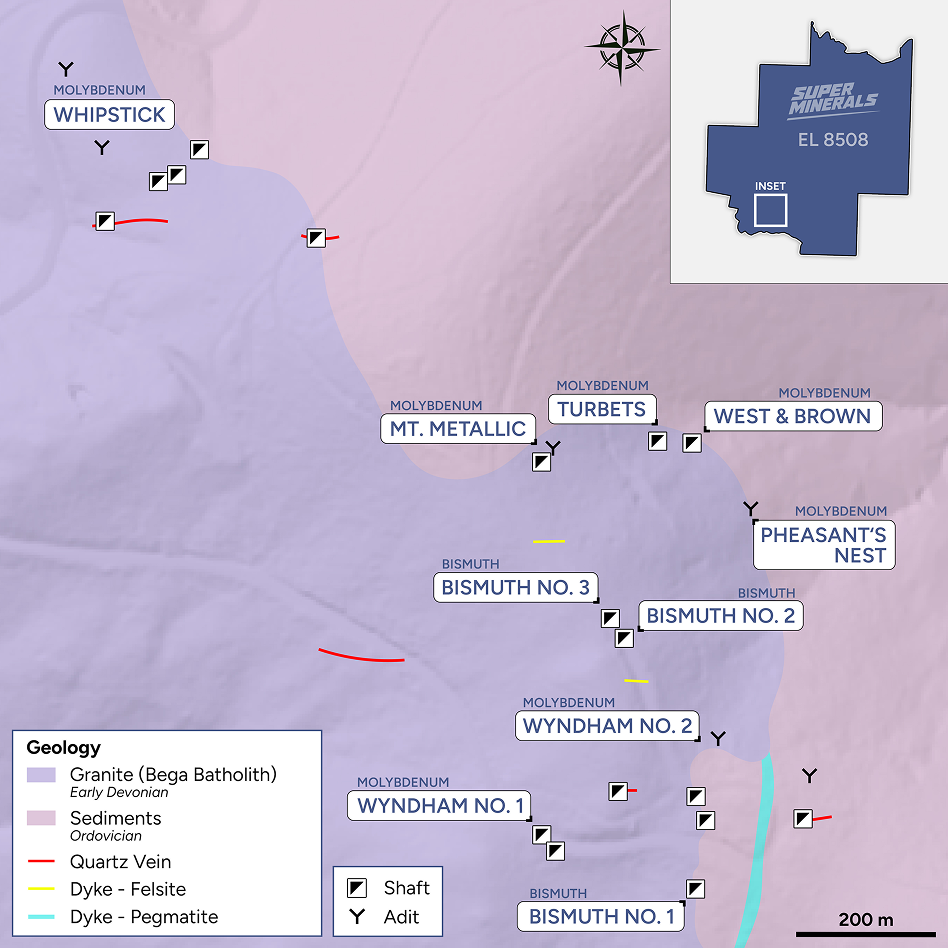
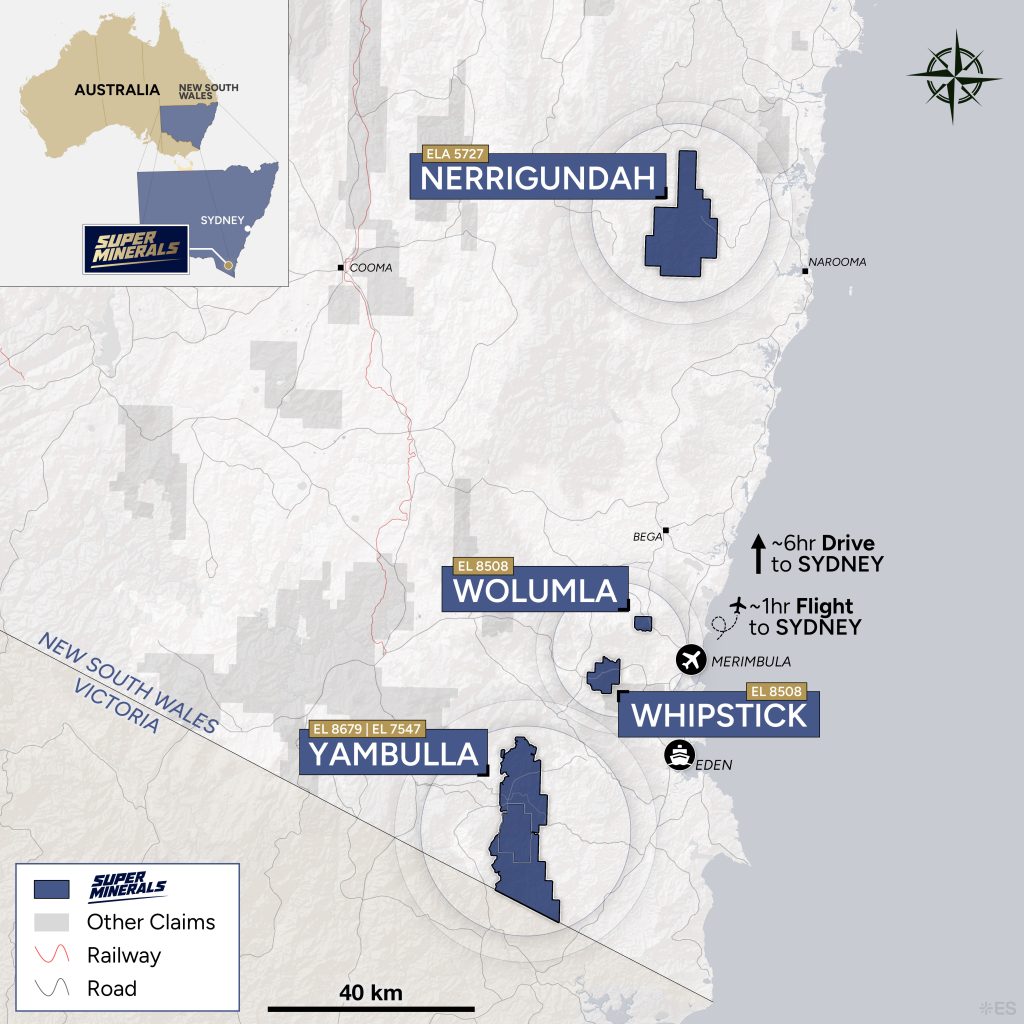
The Whipstick Critical Minerals Project is located within the Eden district of south-east New South Wales and represents Super Minerals’ exposure to Australia’s growing demand for critical minerals essential to battery technology, electronics and renewable energy systems. The project hosts bismuth and molybdenum mineralisation, both materials identified on Australia’s Critical Minerals List.
The Whipstick district was mined for bismuth and molybdenum between 1891 and 1927, with operations resuming between 1941 and 1943. Historical records indicate production of approximately 200 tonnes of bismuth and approximately 100 tonnes of molybdenite during this period, reflecting a significant mineral extraction operation.
As global supply chains for critical minerals face increasing scrutiny and governments accelerate support for domestic production, the Whipstick Project provides Super Minerals with strategic optionality. The project’s historical production record and documented mineralisation provide a foundation for future exploration and resource evaluation as market conditions and project economics evolve.

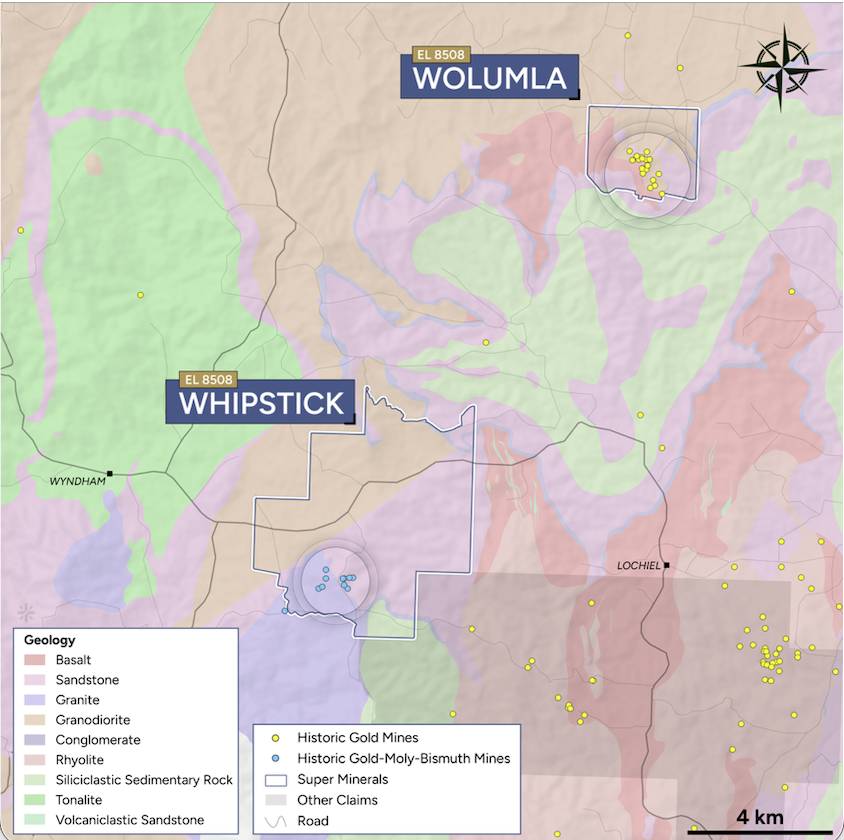
Grab sampling across the Whipstick project area has confirmed the presence of bismuth and molybdenum mineralisation, with results demonstrating the continuation of historically mined mineralisation across the broader project area. The project area is characterised by anomalous stream sediment geochemistry associated with fractionated granite systems, consistent with porphyry-style mineralisation settings.
As part of its portfolio strategy, Super Minerals intends to continue evaluation of the Whipstick Project through soil sampling and geological mapping, with potential for future drilling as market conditions and strategic priorities evolve. The project represents a long-term exploration and development opportunity aligned with Australia’s critical minerals strategy.